Publications
How Robust Are Country Rankings in Educational Mobility?
with Per Engzell — Sociological Science (2025)
We study how analytical choices shape intergenerational mobility rankings using a multiverse approach with 2,880 specifications across 16 countries.
- Country rankings are highly sensitive to modelling choices
- Parameter choice drives most variation
- Some “low mobility” countries perform comparably to Nordic countries
[Read paper](https://sociologicalscience.com/articles-v12-36-891/)
Read paper
Perception of Names in Experimental Studies on Ethnic Origin
Abel Ghekiere & EqualStrength Consortium — Scientific Data (2025)
Cross-national dataset of 1,078 names across nine European countries used to study perceived ethnic signals in experiments.
Key contribution:
- First systematic European validation of name-based ethnic perception
Read paper
Working Papers
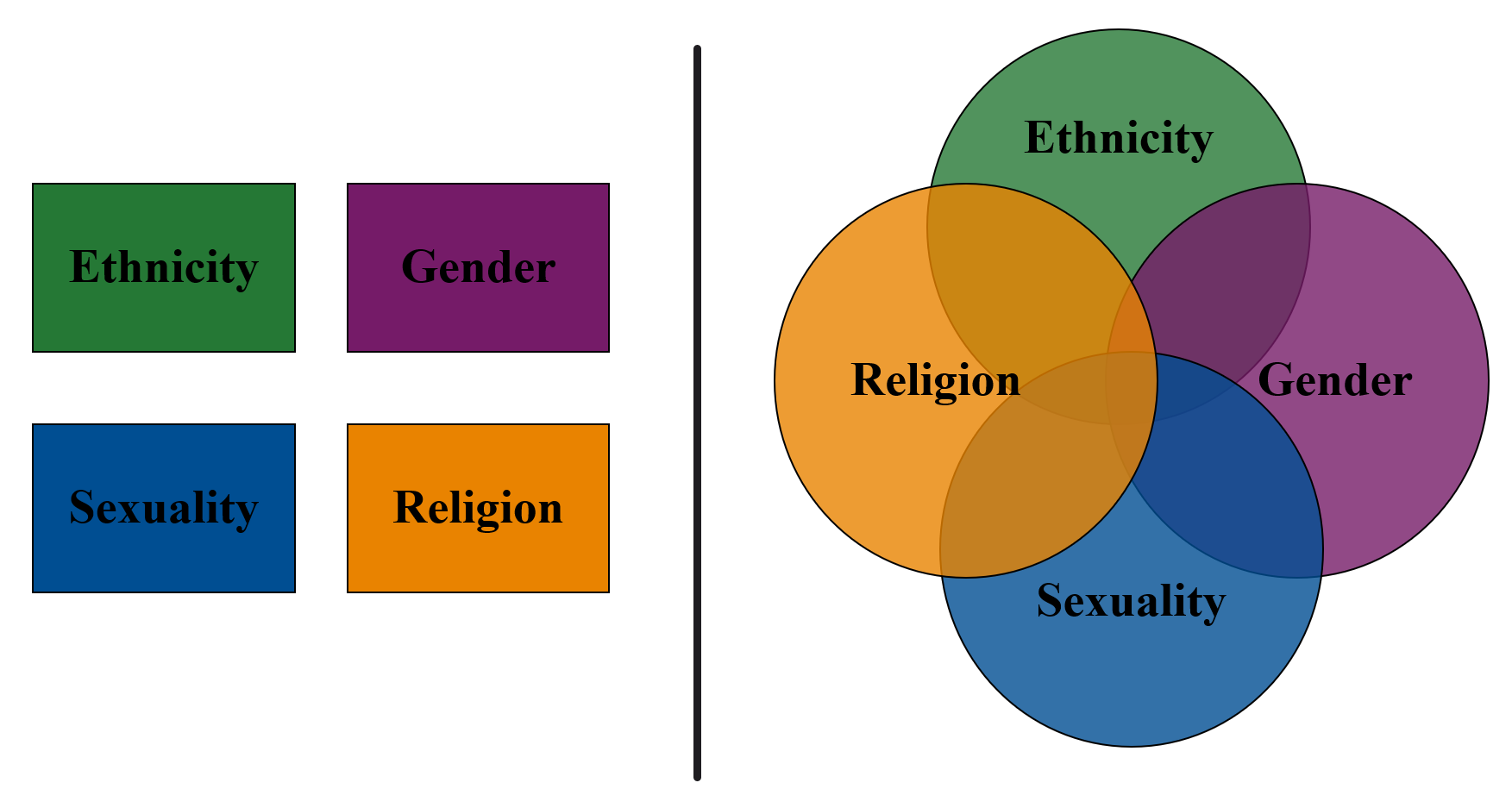
Are stereotypes of warmth and competence intersectionally complex? Investigating intersections of gender, sexuality, ethnicity, and religion.
With Valentina Di Stasio,
Jeremy Michael Jesse Kuhnle,
Vasilena Lachkovska,
Bram Lancee,
Stefanie Sprong,
Stephanie Steinmetz,
Sanne van Oosten,
Susanne Veit,
Elli Zey
Using factorial experiements in an extensive harmonised survey in 10 countries
we look at how gender, sexuality, religion, and ethnicity shape stereotypes in
ways that would be missed with additive models.
Read Working Paper
Work in Progress
Cross-national variation in intersectional stereotype complexity
With Klára Kántova,
Jeremy Michael Jesse Kuhnle,
Vasilena Lachkovska,
Bram Lancee,
Stephanie Steinmetz.
Seeing mixed evidence on intersectionality of stereotypes we use a harmonised
factorial experiment measuring stereotypes based on gender, sexuality, ethnicity, and religion
to investigate whether levels of intersectional stereotype complexity varies between countries.
Using gradational gender measures to test heterogenous effects on stereotypes and prejudice
Given findings that gradational gender scales of self-rated Masculinity and Femininity
can explain outcomes such as health or political attitudes on top of categorical Male/Female
variables, I test wheter repsonden gender typicality affects gender stereotyping and prejudice
in situations related to labour market, housing, and childcare.
Femo- and Homonationalism in Everyday Life: Discrimination Against Muslim Same-Sex Parents While Seeking Childcare in the UK.
With Sanne van Oosten (lead) and Mariña Fernandez-Reino. In preparation for special issue accepted by
Journal of Ethnic and Migration Studies.
Data collection

I am part of the Horizon Europe funded EQUALSTRENGTH consortium, which studies discrimination, prejudice, and hate crime across Europe.
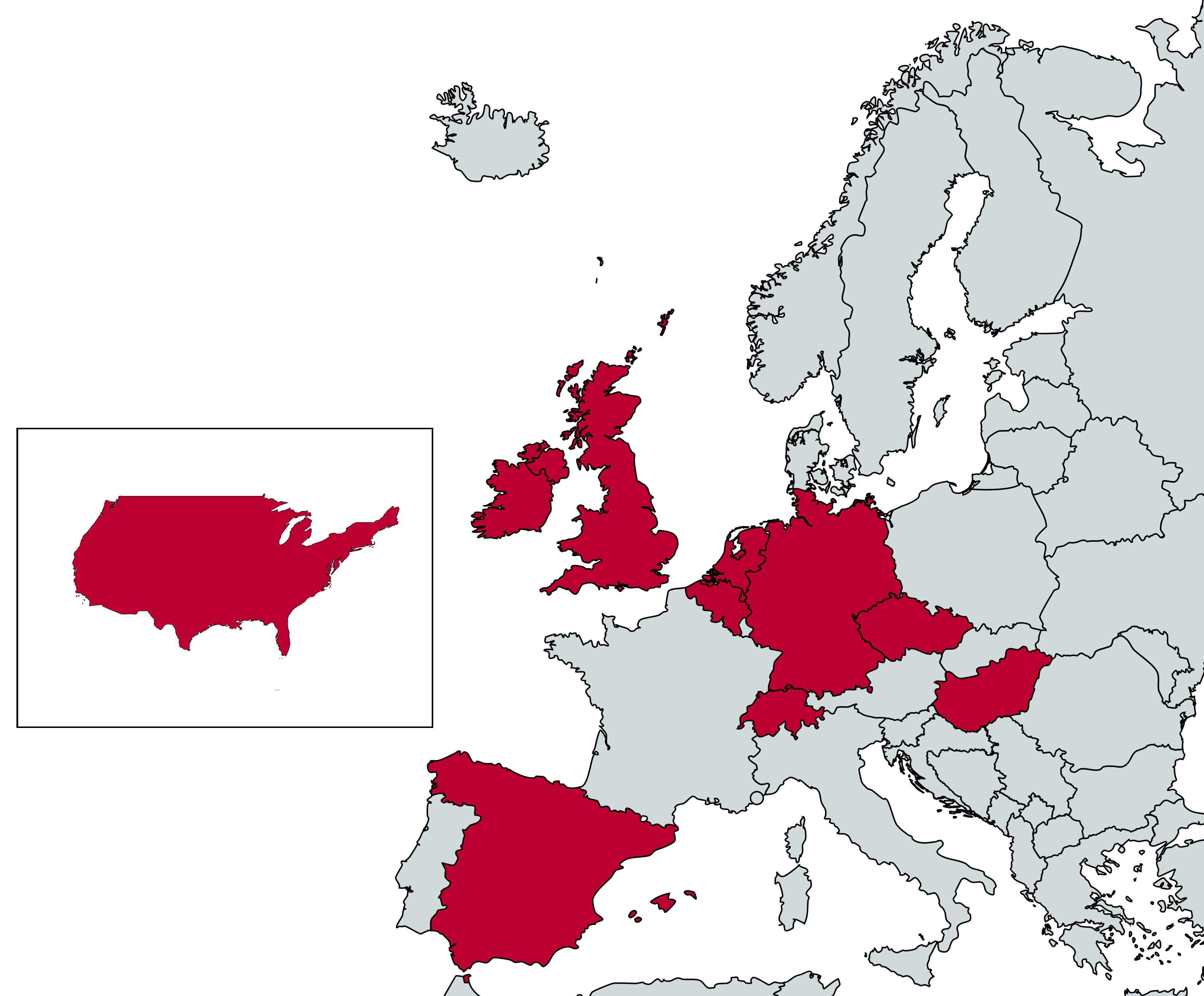
The consortium spans ten institutions in nine countries: Belgium, Czechia, Germany, Hungary, Ireland, Netherlands, Spain, Switzerland, United Kingdom.
Within EQUALSTRENGTH, I played a leading role in WP4, a cross-national survey of majority populations (n = 20,339).
My contributions include:
- Leading the survey development with WP-Leader Eva Zschirnt, including a factorial survey experiment, three list experiments, and an IAT module.
- Implementing full survey logic in the SoSciSurvey platform (PHP + HTML-based randomisation).
- Coordinating translations across 8 languages and 12 country/language versions.
- Managing cross-national harmonisation across ten institutions.